Vesicoureteral Reflux
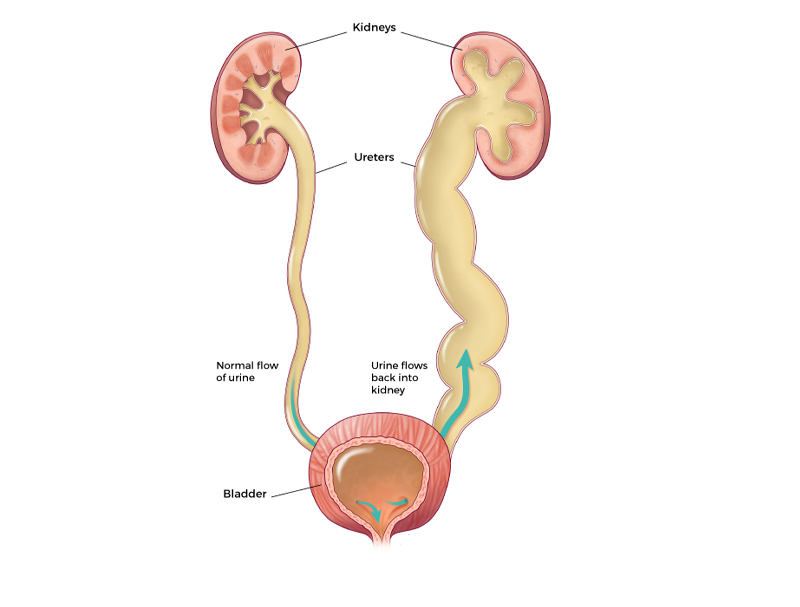
Vesicoureteral Reflux (VUR) is a condition where urine flows backward from the bladder into the ureters or kidneys, instead of moving normally out of the body. This backward flow can increase the risk of urinary tract infections (UTIs) and, if left untreated, may lead to kidney damage — especially in children.
Causes
- Congenital (Primary): Present from birth due to a defect in the valve mechanism at the junction of the ureter and bladder.
- Acquired (Secondary): Develops later due to urinary obstruction, bladder dysfunction, or repeated infections.
Common Symptoms
- Recurrent urinary tract infections
- Fever with chills
- Pain or burning sensation during urination
- Bedwetting or incontinence
- Abdominal or flank pain
Diagnosis
- Urine tests to detect infection
- Ultrasound of kidneys and bladder
- Voiding Cystourethrogram (VCUG)
- Nuclear scan to assess kidney function
Treatment Options
- Medical management: Regular monitoring, antibiotics to prevent infections, and bladder training.
- Surgical treatment: Minimally invasive or open surgery to correct the valve function in severe or persistent cases.
Why Early Diagnosis Matters
Timely treatment of Vesicoureteral Reflux helps prevent kidney scarring, preserve normal kidney function, and reduce the risk of chronic infections.
